


V2V PHOTO OF THE WEEK 2026
V2V Photo of the Week: October 14, 2026

The photograph was taken in Dakshin Battala, West Bengal, India, and shows integrated farming practices, including backyard pond and mushroom cultivation. These activities represent an entrepreneurial approach that strengthens household viability, diversifies livelihood opportunities, and promotes sustainable resource use within small-scale fisheries communities.
Photo Credit and contribution: Upasna Acharya, 2026
V2V Photo of the Week: October 7, 2026

This photo was taken in Purworejo Village, Demak, one of the centers for salted fish processing in the coastal area of Central Java. The image shows dozens of bamboo drying racks neatly lined up across an open yard, filled with small white fish being sun-dried on black mesh nets. This drying process is carried out traditionally by local residents as part of their post-catch seafood processing activities, where the salted fish are laid out under direct sunlight until fully dried and ready to be distributed to various markets.
Photo Credit and contribution: Ahmad Yusuf Amirrudin, 2026
V2V Photo of the Week: September 23, 2026

The Nibela community is situated in the northern part of the KwaZulu-Natal Province, located adjacent to the Isimangaliso Wetland Park which is a UNESCO World Heritage Site. It is a fishing community where almost all families/ households have access to fish whether through direct entry of a family member into the lake or through the existing community value chain. This community is situated in the Nibela peninsula, surrounded by what is officially called the “St Lucia Lake” falling under the park's estuarine protected area component. Fishing has been the lifeline of this community for generations. “The lake is our firm, there are no jobs or work here”, “We were given this lake by our ancestors, it belongs to us”. Previously in the Nibela community, customary institutions such as the traditional authority and the community's traditional council were a central part of the governance of natural resources amongst the community, as there was a common understanding of the significance of the lake and nature as a whole in the sustainability of the community and their livelihoods. This community lived without restriction from accessing the lake and established internal structures to manage any disputes emerging from the lake amongst themselves. This includes other livelihoods such as “incema, ikhwani, qumbe” and other livelihood activities. The community also has a great sense of understanding of its surroundings which includes the indigenous knowledge on sustainable use of resources, such as the indigenous forest and the lake, these are some of the knowledge which were key in the traditional governance of natural resources. However, the increase in regulation of the lake and access to resources has seen the criminalisation of community livelihoods and challenges with access. This picture was taken as a fishermen was preparing to enter the lake to fish at night as part of dealing with struggles around access and presence of conservation surveilence.
Photo Credit and contribution: Siphesihle Mbhele, 2026
V2V Photo of the Week: September 23, 2026
.png)
These photos were taken at the fish landing sites at Capal, Libreville, Gabon, where fishers land their catch and trained personnel record the quantity and type of species. Here, all fish are sold by the weight at the same price, regardless of species. The landing site provides an important space where fishing activities, catch monitoring, local fish markets and community culture come together to create a vibrant small-scale fisheries. These photos offer a glimpse into the everyday practices and livelihoods of small-scale fishers in Gabon.
Photo Credit and contribution: Richard Nyiawung, 2026
V2V Photo of the Week: September 16, 2026

This photograph was taken in the coastal area of Morodemak, Demak Regency, and shows several bagan fishing boats anchored in the area. Bagan fishing boats are a type of lift-net fishing vessel that operates at night, using artificial lights to attract schools of fish into the fishing area. The presence of these bagan fishing boats not only serves as a means of catching fish but also reflects the fishers’ ability to utilize the characteristics of coastal water resources.
Photo Credit and contribution: Endra D.L Mandagi, 2026
V2V Photo of the Week: September 9, 2026

This photo was taken in Uttar Sonakhali, West Bengal, where local fishers work together to bring in their catch using traditional fishing nets. Amid the rhythm and energy of the harvest, a young boy joins the activity, finding joy in being part of a tradition shared across generations. His presence captures more than a moment of childhood happiness—it reflects how fishing is deeply woven into family life, community relationships, and everyday learning. In these shared moments, children experience the knowledge, practices, and connections that sustain fishing communities, allowing childhood to flourish alongside a living tradition.
Photo Credit and contribution: Upasna Acharya, 2026
V2V Photo of the Week: September 2, 2026

This photograph was taken in Morodemak, Demak Regency, Central Java, Indonesia. It depicts a coastal home surrounded by tidal flooding, illustrating how environmental challenges directly affect the well-being of local communities. For many families, recurring floods have become part of daily life, disrupting mobility, damaging homes, and creating health risks due to poor sanitation and prolonged exposure to stagnant water.
Well-being extends beyond physical health; it also includes the ability to live safely, maintain dignity, and feel secure about the future. In Morodemak, coastal residents continuously adapt to rising sea levels and environmental changes while striving to preserve their livelihoods. Despite these hardships, they demonstrate remarkable resilience and a strong sense of community, supporting one another through shared challenges.
This image reminds us that achieving well-being requires more than economic growth. It demands resilient infrastructure, healthy living environments, and inclusive policies that protect vulnerable coastal communities. Ensuring well-being means creating conditions where every individual has the opportunity to live with safety, dignity, and hope.
Photo Credit and contribution: Mohamad Fatkhi Ibrahim Assyakaki, 2026
V2V Photo of the Week: August 26, 2026

This photograph was taken at Balugaon Central Fish Market, Odisha. This photograph captures more than a marketplace; it captures a community where livelihoods, relationships, and value come together every day. During the 2026 V2V Field School, our visit to Balugaon Central Fish Market revealed much more than a place where fish are bought and sold. It offered a glimpse into the many ways value is created through products, people, and everyday interactions. As the main fish trading hub in the area, Balugaon brings together catches from Chilika Lagoon before distributing them to markets near and far. Fresh fish lie in carefully sorted piles on the wet concrete floor, ready to be inspected, weighed, and traded. This is value in its most visible form: the fish itself. Yet the market’s true character comes from the people who animate it. Women move boldly through the crowded space, purchasing fish for resale in other markets. Buyers and sellers negotiate face-to-face, relying on trust, experience, and long-standing relationships. Amid the bustle, transactions unfold through conversation as much as business. Despite visible challenges in handling and hygiene, the market continues to function through shared routines and local knowledge.
Photo Credit and contribution: Anastazia Niyonkulu Bikuba, 2026
V2V Photo of the Week: August 19, 2026

This photo was taken in Purworejo Village, Demak, Indonesia, on June 24, 2026. It captures a meaningful stage in the local anchovy processing chain, where women workers carefully sort and grade dried anchovies after the drying process. The anchovies are supplied by local fishermen, many of whom are the husbands of these women, reflecting the close interdependence between fishing and fish processing within coastal households. By separating dried anchovies from larger fish before distribution to local markets, these women play an essential role in maintaining product quality and supporting the local fisheries economy. More than a routine activity, their work sustains household incomes, strengthens the fisheries value chain, and reflects the shared responsibility between men and women in maintaining coastal livelihoods. Although their contributions often take place behind the scenes, they are essential to ensuring that local fisheries continue to support families and communities.
Photo Credit and contribution: Bahrul Ilmi, 2026
V2V Photo of the Week: August 12, 2026

This photograph was taken in Podampeta village, in Odisha’s Ganjam district, near the mouth of the Rushikulya River. Once home to a fishing community and one of the world’s largest mass nesting sites for Olive Ridley turtles, Podampeta has been steadily transformed by climate change-induced coastal erosion and sand mining. As the sea consumed homes and livelihoods, residents were resettled in New Podampeta, carrying with them memories of a landscape that now survives largely in recollection. What remains is a liminal space, neither fully land nor sea, neither inhabited nor forgotten, where each nesting season is marked by the anticipated return of the Olive Ridley turtles. The most haunting presence in this image, however, is not the ruin itself but the threshold. Ceramic tiles bearing the ‘kalash’, a sacred Hindu emblem symbolising abundance, divine presence, and auspicious beginnings, still frame a doorway that now opens not into a household but towards the vast sea. The threshold has outlived the home it once welcomed, becoming a border between memory and the tide. Beside it, the names of two newlywed couples remain inscribed on the wall, intimate declarations of futures once imagined within these walls. These inscriptions linger long after the house has ceased to be a home, transforming the ruin into an archive where love survives through inscription and memory. This photograph is a meditation on impermanence. Human faith was built into brick, ritual, and relationships; the ocean replied in a language beyond devotion. Here, the doorway no longer marks the entrance to a home but a passage between worlds, where memory outlives architecture, and the tide becomes both archivist and author, erasing walls while rewriting the meaning of home, belonging, and permanence.
Photo Credit and contribution: Oishee Sarkar, 2026
V2V Photo of the Week: August 5, 2026
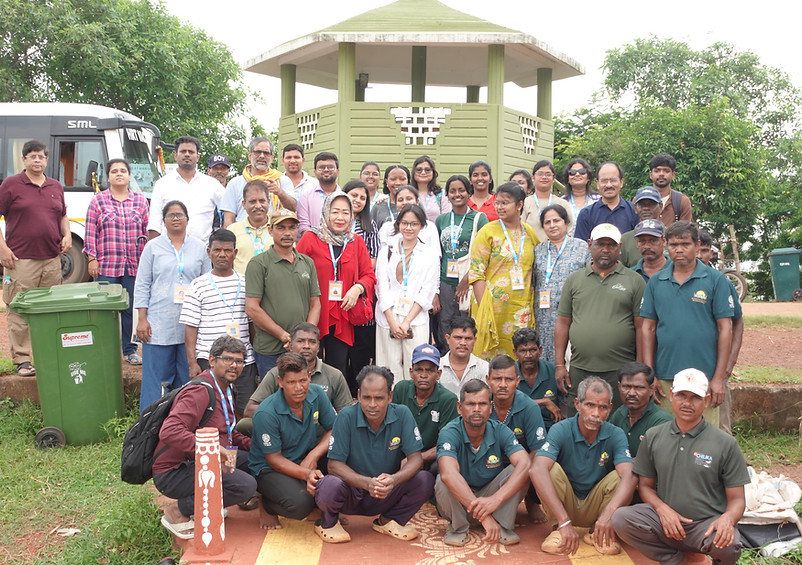
The Krushna Chandra Jena Chilika Vulnerability to Viability (V2V) Annual Field School 2026 is currently underway at the beautiful Chilika Lagoon in Odisha, India. Organised by the Vulnerability to Viability (V2V) Global Partnership in collaboration with the Department of Humanities and Social Sciences, IIT Kharagpur, and NIRMAN Odisha, this year's field school is centered on the theme, "The Krushna Chandra Jena Chilika-V2V Annual Field School 2026 Learning Through Senses: Place-Based, Cross-Cultural and Experiential Education for Sustainable Futures." Through a combination of classroom discussions, field visits, community interactions, field-based learning experiences on Chilika Lagoon, workshops, and cultural activities, participants are engaging with diverse perspectives on sustainability, environmental change, and governance. The field school brings together students, researchers, practitioners, academics, government representatives, NGOs, and community members to learn from the landscape, from each other, and from the lived experiences of local communities. These photographs capture some of the ongoing moments of learning, exploration, and connection from this week-long journey at Chilika.
Photo Credit: Md Nazmul Hasan, 2026
Contribution: Sanzida Alam, 2026
V2V Photo of the Week: July 29, 2026
.jpg)
This photograph was taken behind a villager's house in Purworejo Village, Demak Regency, Indonesia. It tells the story of a livelihood that once prospered, but gradually disappeared as environmental conditions changed. The mangrove forest now stands amongst abandoned aquaculture ponds, with a narrow bamboo walkway leading those who wish to witness a place reclaimed by water. The pond owner voiced his struggles to maintain the ponds while facing recurring tidal floods that repeatedly damaged the embankments and rendered aquaculture increasingly unviable. As fragile as glass, the bamboo path serves as a reminder that both relentless use and prolonged neglect can leave behind similar traces of deterioration.
Photo Credit and contribution: Nisrina Alya Kamila Wahyudi, 2026
V2V Photo of the Week: July 22, 2026
_JPG.jpg)
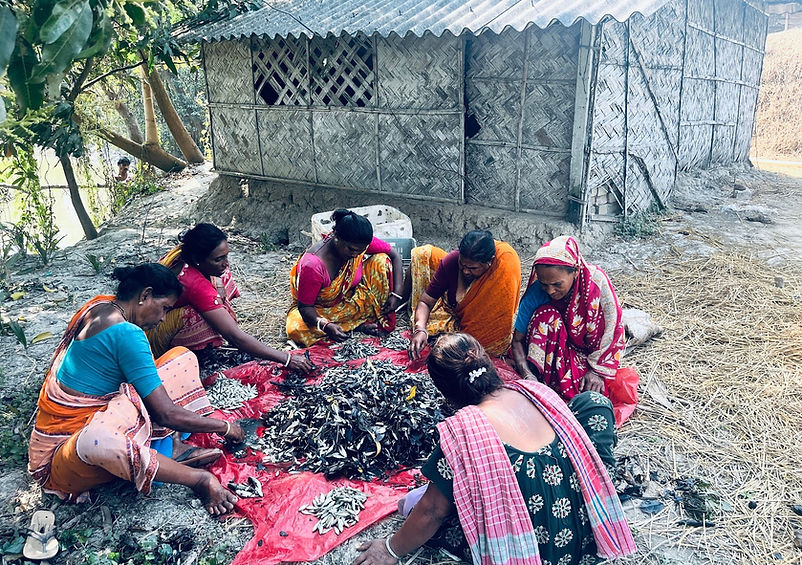
This photograph was taken in the Indian Sundarbans, West Bengal, where women fishers gather after the harvest. It captures a powerful moment of collaboration, highlighting the strong community bonds and social capital that support small-scale fisheries livelihoods. Through shared labor, mutual assistance, and collective resilience, these women play a vital role in sustaining both their households and the coastal fishing communities of the Sundarbans.
Photo Credit and contribution: Upasna Acharya, 2026
V2V Photo of the Week: July 15, 2026
.png)
This photo was taken in the coastal area of Purworejo, Indonesia and shows a fuel station that serves local fishermen. As an important supporting facility, it provides the fuel required to operate fishing boats and access marine resources. Within the V2V framework, this facility represents physical capital because it enables the effective utilization of natural capital in the form of fishery resources. The fuel station also contributes to financial capital by supporting fishing activities that generate income for coastal households. Located in an area affected by tidal flooding (rob), the facility reflects the resilience of coastal communities in maintaining their livelihoods despite ongoing environmental challenges.
Photo Credit and contribution: Muhammad Ilham Wardani, 2026
V2V Photo of the Week: July 8, 2026

This photo was taken in Jharkhali, Sundarbans, West Bengal, India, where a couple ventures into the mangrove forest to catch crabs, relying on their courage, teamwork, and resilience to earn a living. Despite the unpredictable tides and the many dangers of the Sundarbans, they work side by side to support their family, with each day's catch representing not only their livelihood but also their hope for a brighter future for their children.
Photo Credit and contribution: Upasna Acharya, 2026
V2V Photo of the Week: July 2, 2026

This photo was taken in Purworejo Village, Demak, Indonesia. It captures the coastal livelihoods of women working in the home industry of fish processing. There is a woman arranging hundreds of small fish beside the road and sorting the fish by hand with quiet precision. Most of the women who are doing the home industry fish processing earned the knowledge of the drying process independently or through generations. One of the communities here is named Community Ayu Lestari, where individual endurance becomes collective strength. These scattered acts of resilience transform into structured power, allowing women to have their own income. The word resilience becomes a movement when adapting turns into solidarity and voice.
Photo Credit and contribution: Adrina Herriet Berliana, 2026
V2V Photo of the Week: June 24, 2026

These photos were taken at the Opening Ceremony of the Summer Course 2026 held at Universitas Diponegoro, Semarang, Indonesia, on June 23–25, 2026, in collaboration with the University of Waterloo, Canada. The summer course, themed “Coastal Communities in Transition: Pathways from Vulnerability to Viability (V2V),” was funded by WCU Universitas Diponegoro and brought together students, researchers, and scholars from around the world to engage in critical discussions on sustainability, resilience, and well-being in coastal communities. The event featured distinguished speakers, including Prof. Munasik on ocean and fisheries issues and Madam Ita on women fishers’ empowerment, followed by interactive dialogue, group discussions, and knowledge-sharing sessions. The program was further enriched by the participation of Prof. Prateep Kumar Nayak as a Visiting Professor, supported by WCU Faculty of Economics and Business, Universitas Diponegoro, where he contributed to PhD examinations, research supervision, and academic capacity building. Participants also took part in a field visit to Desa Purworejo, Demak, to explore fishers’ livelihoods, women’s empowerment initiatives, and community resilience in the face of coastal flooding and high tides, reinforcing the interconnected dimensions of capital, resilience, and well-being in transition pathways from vulnerability to viability.
Photo Credit and contribution: Adrina Herriet Berliana, 2026
V2V Photo of the Week: June 17, 2026

This photo was taken in Uttar Sonakhali, West Bengal. It portrays a profoundly descriptive scene of the resilient spirit and enduring heritage of rural India, focusing on the daily lives of local fisherwomen. From the first light of dawn until the sun sets, these women rely on their traditional fishing nets—not just as physical tools, but as vital lifelines to support their families and sustain their households. Set against the serene backdrop of West Bengal's rural waterways, the photograph beautifully captures a timeless practice passed down through generations, highlighting how these women form the absolute backbone of small-scale fisheries. Every ripple in the water and cast of the net tells a story of strength, sustainability, and an unbreakable connection between human livelihood and the natural world.
Photo Credit and contribution: Upasna Acharya, 2026
V2V PHOTO OF THE WEEK 2026
V2V Photo of the Week: June 10, 2026

This drawing depicts everyday life in Kumirmari village in the Sundarban region and highlights how local communities have adapted to environmental challenges. It can be seen that many households cultivate vegetables around their homes for sustenance, while almost every household maintains a pond. According to local residents, these ponds were originally constructed to meet domestic water needs but are now also used for small-scale fish farming. The drawing also shows houses built on raised foundations, reflecting a common adaptation strategy to protect homes from flooding and cyclones, which frequently affect the area. Overall, the scene illustrates the resilience and ingenuity of the local people, who have developed practical ways to sustain their livelihoods and thrive in a challenging environmental setting.
Photo Credit and contribution: Santanu Debnath, 2026
V2V Photo of the Week: June 3, 2026

The photos were taken in June 2024 at the Mochimune branch of Shimizu Fisheries Cooperative Association (Mochimune FCA), Shizuoka Prefecture, Japan. The Mochimune FCA is well known for its suifuku collaboration (Fisheries and welfare collaboration), in which local fishers hire people with disabilities to help with their fish-landing works and other tasks. This is considered to be another important role that small-scale fisheries can play. The Fisheries Agency of Japan and some prefectural governments have recently begun promoting suifuku collaboration, but this is a bottom-up initiative, which makes it rare and unique.
Photo Credit and contribution: Yinji Li, 2026
V2V Photo of the Week: May 27, 2026
_JPG.jpg)
This photo was taken in Jogendranagar, West Bengal, in the Indian Sundarbans. This photo is about intergenerational resilience, portraying a mother-daughter duo who remain connected to small-scale fishing while building professional identities as a teacher and a healthcare provider. Despite pursuing modern careers, they continue to engage with traditional livelihood practices that have supported their family for generations. Their story reflects the coexistence of heritage and transformation in the Sundarbans, where women balance professional responsibilities, caregiving, and cultural traditions amid environmental and economic uncertainties. The image highlights resilience, adaptation, and the enduring connection between community, livelihood, and identity.
Photo Credit and contribution: Upasna Acharya, 2026
V2V Photo of the Week: May 20, 2026

Behind the forest office at Munshigonj, the boats lie in silence. They were not always like this, motionless, hollow, forgotten. They once moved through the narrow waterways of the Sundarbans, used by fishermen working the rivers and creeks. Each boat carried nets, tools, and hopes from the catch of fish, earning a living from the water. These boats were livelihoods, futures, families carved into the wood. But these boats were taken. Some were seized during seasonal fishing bans. Others belonged to fishermen caught using pesticides or chemicals to catch fish, methods that damage the ecosystem. Some were confiscated from those collecting fish fry, a practice restricted to protect future fish populations.
Now they rest here, pulled out of the water and left behind the Munshigonj forest office. Their wooden bodies are drying, cracking, and slowly breaking down under the sun and rain. No one returns to claim them. No repairs are made. And while the boats themselves are still, they point to lives that are not, livelihoods interrupted, work halted, and futures forced to begin again from nothing.
Photo Credit and contribution: Tahura Farbin, 2026
V2V Photo of the Week: May 13, 2026

The photos were taken in March 2026 at the Yui Fisheries Cooperative Association (FCA) in Shizuoka Prefecture, Japan, during a hands-on learning event hosted by local fishers for women and girls. In recent years, sakura shrimp fishers from Yui FCA and whitebait fishers from Tagonoura FCA have been collaborating on wakame seaweed farming, aiming to create a new source of income while also contributing to environmental and social education.
Photo Credit and contribution: Yinji Li, 2026
V2V Photo of the Week: May 6, 2026
.png)
The photos were taken at the World Small-Scale Fisheries (SSF) Congress held in Thailand from April 27 to May 1, 2026. Since 2010, the SSF Congress has served as a global platform that brings together fishers, researchers, policymakers, and development partners to share knowledge, strengthen connections, and co-develop solutions for more sustainable and equitable small-scale fisheries. The event emphasizes collaboration and collective action to support the future of small-scale fisheries worldwide.
The Vulnerability to Viability (V2V) Global Partnership was also present at the Congress, with country coordinators, members, and investigators presenting case studies and research from different regions. Their contributions supported broader discussions on resilience and sustainability in fisheries communities. As part of the Congress, the V2V Global Partnership organized a double-panel session titled “Transitioning from Vulnerability to Viability (V2V): Insights from Small-Scale Fisheries of Africa and Asia.” This session focused on V2V transitions as a novel approach to understanding how vulnerable small-scale fisheries can move toward viability, as well as how they can sustain this progress without reverting to vulnerability. Researchers from the twelve V2V Global Partnership countries in Africa and Asia presented 14 case studies exploring different dimensions of V2V transitions within small-scale fisheries contexts. The presentations highlighted that while small-scale fisheries will continue to face multiple challenges, building on existing strengths and capacities can be an effective strategy for enhancing viability. The discussions also emphasized the need for further conceptual and methodological development of the V2V transitions approach.
Photo Credit: Ruyel Miah and Prateep Nayak, 2026
Contribution: Sanzida Alam and Prateep Nayak, 2026
V2V Photo of the Week: April 29, 2026

This photograph was taken in Munshiganj, Sundarbans, Bangladesh. This photo portrays a quiet yet powerful moment at the river’s edge, where the land feels temporary and the water always close, and a woman stands before a crumbling Ma Durga's ghor. The structure is fragile, its corrugated roof bent and broken, its concrete pillars stained and worn. It leans quietly toward collapse, as though time itself has been pressing down on it. Yet inside, the deity remains intact, watching over a space that refuses to be abandoned. There are no walls to shield her, no polished floors, no certainty of safety. But that does not matter. Worship does not wait for perfect conditions. It happens here, amid loss of land, rust, and the slow erosion of the structure itself. Behind her and beyond the Ma Durga, the river flows steadily, indifferent. In front of her, however, faith holds its ground. Even as the building weakens, the act of devotion does not.
Photo Credit and Contribution: Tahura Farbin, 2026
V2V Photo of the Week: April 22, 2026

This photo is taken in Jyotishpur in the Sundarbans. Women catching fish in a small homestead pond in Jyotishpur, Sundarbans. These everyday fishing activities are central to sustaining livelihoods and strengthening local food security. Each catch represents a commitment to sustaining their families and preserving their way of life, weaving together the threads of tradition and resilience.
Photo Credit and Contribution: Upasna Acharya, 2026
V2V Photo of the Week: April 15, 2026
.png)
The photos were taken in October 2024 at the Hayama branch of the Shonan Fisheries Cooperative Association in Kanagawa Prefecture, Japan.
Akira Nagakubo, a fisher with the Hayama branch of the Shonan Fisheries Cooperative Association, is now in her 11th year in the profession. Since entering the industry as a newcomer, she has faced numerous challenges, but she notes that the number of fellow fishers has gradually increased. Looking ahead, she hopes to see more women join the field—especially those eager to collaborate and take on new initiatives together.
“Coastal and small-scale fisheries, compared to other types of fishing, offer a more accessible entry point for women. The flexibility of working hours makes it easier to balance fishing with raising children. In some cases, fishers can even bring their children along, giving them the opportunity to see and learn about their parents’ work firsthand.”
Photo Credit and Contribution: Yinji Li, 2026
V2V Photo of the Week: April 8, 2026

This photo was taken in the Western Region of Ghana and shows a fishing net filled with a mix of fish and plastic waste. Instead of bringing in a clean catch, the net contains bottles, wrappers, and other debris along with a small number of fish. It reflects a situation where plastics are becoming a regular part of what fishers collect from the sea, sometimes even more than the fish itself.
This is a problem for fishers because it directly affects their earnings. When a large portion of the catch is plastic, they have less fish to sell in the market. They also spend more time separating waste from the catch, which reduces their efficiency and adds extra work. In some cases, plastic can damage nets, leading to additional costs for repair or replacement. The impact goes beyond individual fishers. Many coastal communities depend on fishing for both income and food. Lower fish catches can mean reduced household income and less fish available for local consumption. Over time, this can affect food security and increase financial pressure on families. Plastic pollution also affects fish stocks. Marine species can ingest or get entangled in plastic, which can reduce their population and make fishing even more difficult in the future. This creates a cycle where both the environment and livelihoods are negatively affected.
Overall, the image shows a practical challenge faced by fishing communities—where pollution is directly interfering with daily work and long-term sustainability.
Photo Credit: Samuel Abalansa, 2026
Contributions: Samuel Abalansa and Sanzida Alam, 2026
V2V Photo of the Week: April 1, 2026

This photograph was taken from the left embankment near the Kumirmari Ferry Ghat during the Sundarbans Field School I attended from 16–22 January 2026. As I looked at the boat facing Choto Molla Khali island, I began to think about how these two islands are separated by the river yet bound together by the very same water. In this landscape, the boat emerges not as a passive object but as an active presence, almost a living character, in the everyday lives of the island’s people.
On this remote island, the grand project of Global Positioning collapses; coordinates lose their authority. Instead, it is the boat that offers orientation, mobility, and meaning. In this sense, the boat becomes a macrocosmic extension of the island itself: both are suspended, floating on a fluid terrain that resists fixity. This moment left me with questions I may pursue further, or perhaps it quietly tethered me to this place. The image opens up the possibility of return—to Kumirmari and its neighbouring islands—where the boat continues to inhabit and generate multiple narratives, carrying stories as much as people across the water.
Photo credit and contribution: Shahrukh Khan, 2026
V2V Photo of the Week: March 25, 2026
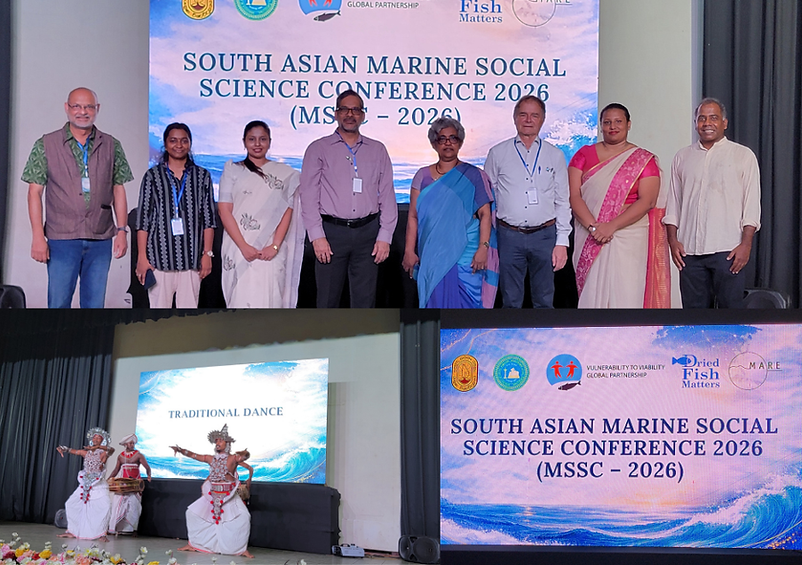
These photos are from the recently concluded South Asia Marine Social Science Conference (MSSC), which took place at the University of Ruhuna, Matara, Sri Lanka, from 18–21 March 2026. The South Asia Marine Social Science Conference is a collaboration between the research networks V2V Global Partnership and DriedFishMatters in Canada, the University of Ruhuna and the University of Jaffna in Sri Lanka, and the Centre for Maritime Research (MARE) in the Netherlands.
Similar to other parts of the world, South Asia’s coastlines and marine areas are changing rapidly. Industrialization and urbanization are altering the coastal landscape, new ports are being constructed, and economic sectors such as tourism and aquaculture are emerging. These changes are affecting human communities: fishers and other coastal inhabitants are losing control and access over marine and coastal spaces, and the diversion of fish catches from food to fishmeal and poultry feed is affecting food security and nutrition. Conflicts over boundaries and resource use are increasing, reflected in tensions between small and large actors, insiders and outsiders, and across gender and social groups. New laws are being introduced and spatial management plans developed. Coastal populations are migrating for new employment, while migrants from inland areas are moving toward coastal regions. At the same time, marine pollution and erosion are rising, with sea-level rise and climate change looming. Most of these changes have a societal dimension. The MSSC emphasized that the social sciences have much to contribute to understanding the dynamics of coastal and marine change and informing policymaking at international, national, and sub-national levels.
This one-of-a-kind conference gathered over 70 early-career and senior social scientists (anthropologists, geographers, economists, environmental scientists, political scientists, etc.) working in South Asia (Bangladesh, India, Pakistan, Sri Lanka, Myanmar, and the Maldives) for a vibrant debate on emerging challenges. Presentations and discussions were organized around four related themes: 1) Tides of Nature: ecologies, disasters, and climate change; 2) From Above the Waves: governing the coast and marine scape; 3) Threadbare Lives: vulnerability and pathways to viability in coastal space; and 4) Inequality and Justice on the Coast: understandings and action potential.
Photo credit and contribution: Prateep Kumar Nayak, 2026
V2V Photo of the Week: March 18, 2026
.jpg)
In Kumirmari, this everyday domestic surface holds both the material and the immaterial components of the space. The dal-bori and atta are laid out in the sun to be carefully dried, preserved, and made durable against humidity, uncertainty, and scarcity. The fish motifs engraved on the table silently mark how coastal life shapes perception; how the space is seen, felt, and remembered through waters and the unseen labour. The same picture carries an urban presence - as the Winter Field School gets arranged in the place from 16th to 22nd January, 2026; colour pencils, a lip-guard, rest beside their familiar rhythms of life in the Sundarban.
Photo credit and contribution: Deboleena Sengupta, 2026
V2V Photo of the Week: March 11, 2026
_JPG.jpg)
This photo was taken during the V2V Field School and captures the serene landscape of the Mangala Jodi Wetland. The wetland is protected by the local community, who have transformed their relationship with nature by shifting from bird hunting to becoming dedicated guardians of the ecosystem. In the image, a traditional wooden boat, guided with a bamboo cane, moves gently through the water, reflecting the daily life and practices of the people who live with and care for the wetland. Today, Mangala Jodi stands as a powerful example of community-led conservation. The people who once depended on hunting now protect the birds and biodiversity that thrive in this wetland. Their efforts not only preserve the ecological richness of the area but also create sustainable livelihoods through eco-tourism and stewardship of the land.
Photo credit and contribution: Adrina Herriet Berliana, 2025
V2V Photo of the Week: March 4, 2026
.jpeg)
The pitch-black stripes on the bright brown backdrop shown in this picture are charred remnants of dry hay. Taken in Kumirmari, just after the winter harvest, the picture resembles tiger skin. Every year, after the harvest, a heavy amount of hay is stacked in the fields. In the island villages of Sundarban, hay comes to several usages, from animal fodder to the primary material for thatching the roofs of mud houses. Yet, all of it cannot be exhausted in utility, and the excess is burnt down. The villagers have conflicting opinions about the effect of this practice. Some maintain that the ash fertilises the field for future cultivation, while others think that the smoke contributes to air pollution. Looking at it, I was wondering why the excess is not taken away somewhere where it would be needed, whether it can be used in mulching or gardening elsewhere. A local woman, coming from the field, broke into my reverie. I shared my concerns with her, and she told me that, beyond everything else, it is a practical necessity. The field needs to be prepared for the next cultivation, and transportation of the surplus hay is beyond the farmers’ affordability.
Photo credit and contribution: Souvik Das, 2026
V2V Photo of the Week: February 25, 2026

This photo was taken at the gateway to Gunung Nenek Semukut in Kampung Mukut, Pulau Tioman, Malaysia, and it tells the story of a coastal community's transformation. Once primarily dependent on fishing for their livelihood, the villagers have gradually shifted towards tourism, opening new opportunities for growth and sustainability. The gateway not only welcomes visitors to one of Tioman’s most majestic natural landmarks but also symbolises the resilience of the local community in adapting to changes while continuing to preserve their cultural identity and roots.
Photo credit and contributor: Nik Mohamad Afiq, 2025
V2V Photo of the Week: February 18, 2026

This photograph depicts women engaged in fish sorting and drying in Dadanpatrabar, a coastal village in Purba Medinipur, West Bengal, India. Women fishworkers play a vital role in small-scale fisheries, especially in post- harvest activities likefish sorting, cleaning and drying. However, despite their crucial contributions, the livelihood of women fishworkersengaged in fish drying is threatened due to compounding factors of depleting fish stock, coastal grabbing, and climatechange-induced variabilities. For example, overfishing caused by destructive gear like trawl nets has resulted in declining catch per effort for small-scale family-based fishing enterprises. This, in turn, has reduced the availability of fish for fish drying, which is an important livelihood of women fishworkers. Secondly, escalation of coastal infrastructure development in the form of tourism, maritime trade, defence etc. for a viable blue economy, continues to threaten the access to traditional fish drying spaces used by women fishworkers. Thirdly, climate variabilities characterised by inclement weather is resulting in not only loss of fishing days, but days of fish drying as well. Amidst such concerns, the women fishworkers continue to secure the food and nutritional needs of the community at large, while defending their customary rights over coastal and marine spaces.
Photo credit and contributor: Amitrajit Chakraborty, 2026
V2V Photo of the Week: February 11, 2026

This photo was taken in the wetland area of Mangalajodi, Chilika Lagoon, on the east coast of Indiaand it tells the story of fishermen weighing their fresh catch using a simple, handmade scale. After returning from fishing, they gather collectively to measure the harvest before selling it directly to buyers. The improvised weighing tool reflects both resourcefulness and resilience, showing that material limitations do not prevent these communities from sustaining their livelihoods.
Beyond the act of selling fish, this scene illustrates the value of cooperation and shared trust among small-scale fishers. Simplicity in tools does not diminish the dignity of labour; instead, it highlights how communities mobilize available resources to maintain economic survival. In this way, resilience is not only found in advanced technology or infrastructure, but also in the collective strength and ingenuity of people adapting to uncertainty.
Photo credit and contributor: Jubakti Anggoro, 2025
V2V Photo of the Week: February 4, 2026

This photo was taken in the Old Podampeta village in the south coast of Odisha state in India, and it tells the stories of climate change, displacement, and a community slowly losing its roots. On the edge of the Bay of Bengal lie an empty and deserted village what once used to be a close-knit and vibrant fishing community. Here, fisher families once lived and worked together, but what remains now are broken walls and scattered bricks that stand as silent witnesses to the power of the sea.
Each passing wave erodes the land a little bit more, forcing families to abandon their homes and move further inland. This coastline, once known for the nesting of endangered sea turtles - Olive Ridley - now tells a different story; a story that paints images of loss and uncertainty. The beauty of the blue sky and the endless ocean hides a quiet tragedy, where nature nurtures and destroys at the same time.
Photo credit and contributor: Hirak jyoti Sarmah, 2025
V2V Photo of the Week: January 28, 2026
.jpg)
This photo was taken in Kumirmari, a remote village in the Sundarbans, during the Winter Field School in January 2026. This picture depicts a pond near a household in Kumirmari, Sundarbans, highlighting its role as a source of daily sustenance and resilience for the village community. The village mainly depends on farming and fishing for its livelihood, and people cultivate small plots of land near their homes, growing several varieties of vegetables. The land has experienced several instances of natural disasters and other calamities over the years. However, most of the people of the village that we interacted with during our stay emphasised how much they love their village and that they would not want to move away from this place, despite everything. This pond is a testament to the resilience that the people have in this place; the resilience that helps them to come back and set their lives up again even after the adversities they face in this precarious place. The pond also becomes a lifeline for the people here, providing them with their daily sustenance.
Photo credit and contributor: Angelina Thomas, 2026
V2V Photo of the Week: January 14, 2026
.jpg)
This photo was taken in Kampung Salang, Tioman Island, Malaysia, and it tells the story of contrast—between thriving tourism and quiet abandonment. The image shows an abandoned bar in a kampung that otherwise booms with visitors, where most locals own and profit from chalets, restaurants, and dive shops. Yet this space stands still, left behind. It creates a striking contrast between sustained viability and neglect. Across Tioman Island, and on many islands throughout Malaysia, failed development projects and closed shops are left desolate, with no clear responsibility for who should clean up what remains. Locals and tourists pass by this bar on their way to dinner, barely noticing it anymore—abandonment has become part of the everyday landscape.
This scene mirrors the realities of many small-scale fishing and coastal communities, where uneven development brings short-term growth but leaves long-term scars. It reflects how livelihoods tied to tourism and coastal resources can be fragile, shaping spaces where resilience and vulnerability exist side by side.
Photo credit and contributor: Chuah Yi Ying Jenelle, 2025
V2V Photo of the Week: January 7, 2026

This photo was taken in Mangalajodi Bird Sanctuary in the Chilika Lagoon and represents both hope and transformation. Once known as a site of bird hunting, the community has since shifted toward conservation, recognizing the ecological and cultural value of protecting wildlife. The eggs become a symbol of continuity and regeneration—life that will sustain not only the species but also the broader ecosystem.
The wetlands are thus more than a source of livelihood; they serve as a home for diverse ecological processes. By safeguarding these fragile forms of life, local communities demonstrate how human well-being and environmental sustainability are deeply interconnected. The protection of bird habitats reflects a broader vision of resilience, where conservation and livelihoods coexist in mutual reinforcement.
Photo credit and contributor: Jubakti Anggoro, 2025